Home › The DXA bone density scan: understanding bone density in a few minutes
The DXA bone density scan: understanding bone density in a few minutes
Bone densitometry measures bone density in 10 to 15 minutes, painlessly, with Dr Amrane in Bordj Bou Arreridj.
The densitometer
What is a DXA scan?
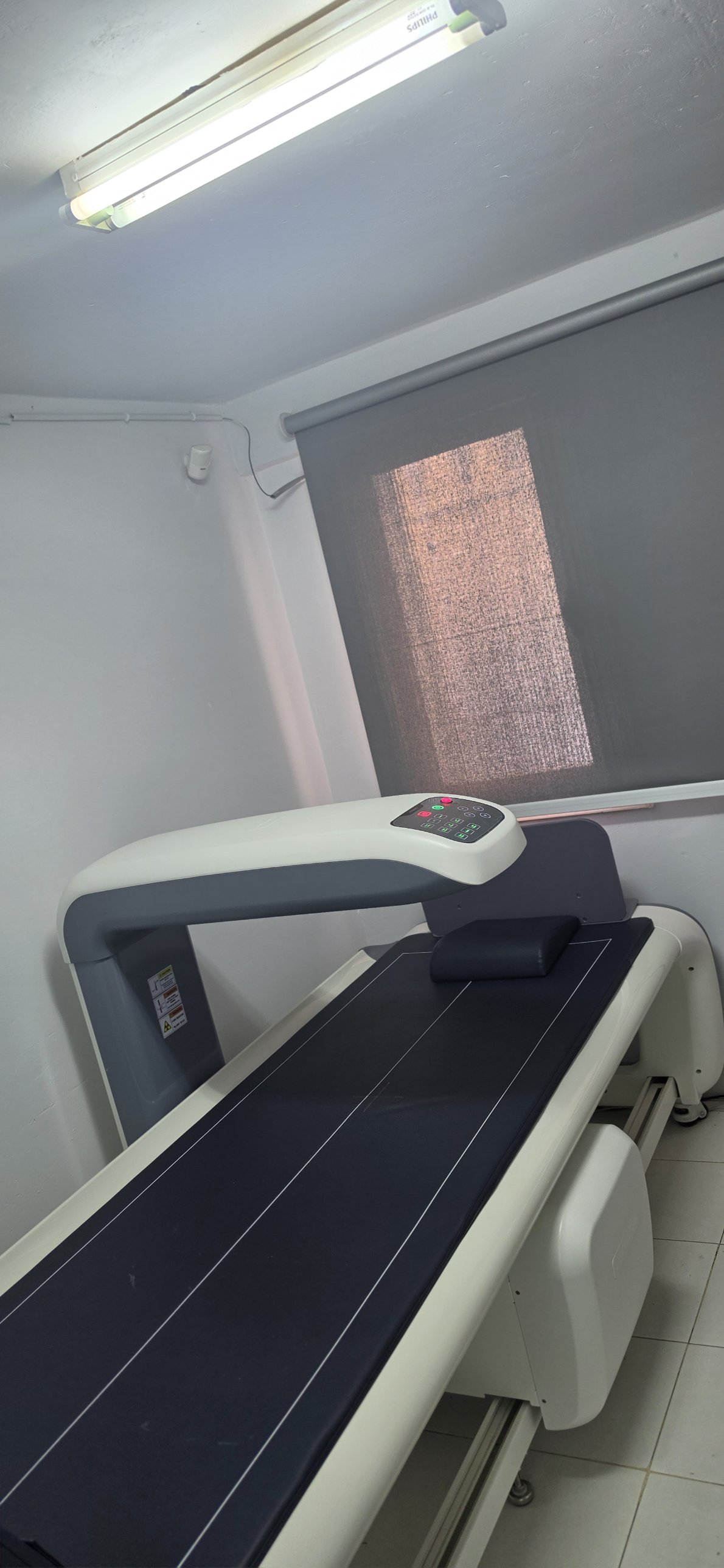
Bone densitometry, also called BMD or DXA (dual-energy X-ray absorptiometry), is an exam that measures the amount of minerals in the bones, mainly calcium. It uses two low-energy X-ray beams. The exam is painless, needs no injection or special preparation, and the radiation dose is very low, well below that of a standard X-ray.
What is it for?
A bone can lose density without pain for a long time. This loss is often silent until a fracture occurs. The scan therefore allows early detection of bone fragility, before a fracture, and monitoring of its evolution over time.
Results are expressed as scores:
- T-score: compares the patient's bone density with that of a healthy young adult of the same sex. A score of -1 or above is normal; between -1 and -2.5 it indicates low bone mass (osteopenia); at -2.5 or below it corresponds to osteoporosis.
- Z-score: compares density with people of the same age and sex. It is particularly useful in children and in people who have not reached menopause.
Why is it prescribed?
The exam is requested in particular in the following situations:
- postmenopausal women, and men from a certain age, to screen for osteoporosis;
- previous fracture, especially after minimal trauma;
- prolonged corticosteroid treatment;
- diseases that can weaken bones: hyperparathyroidism, inflammatory diseases such as rheumatoid arthritis, chronic kidney disease, hormonal disorders (early menopause, hypogonadism), eating disorders;
- monitoring the effectiveness of an osteoporosis treatment.
What our machine adds
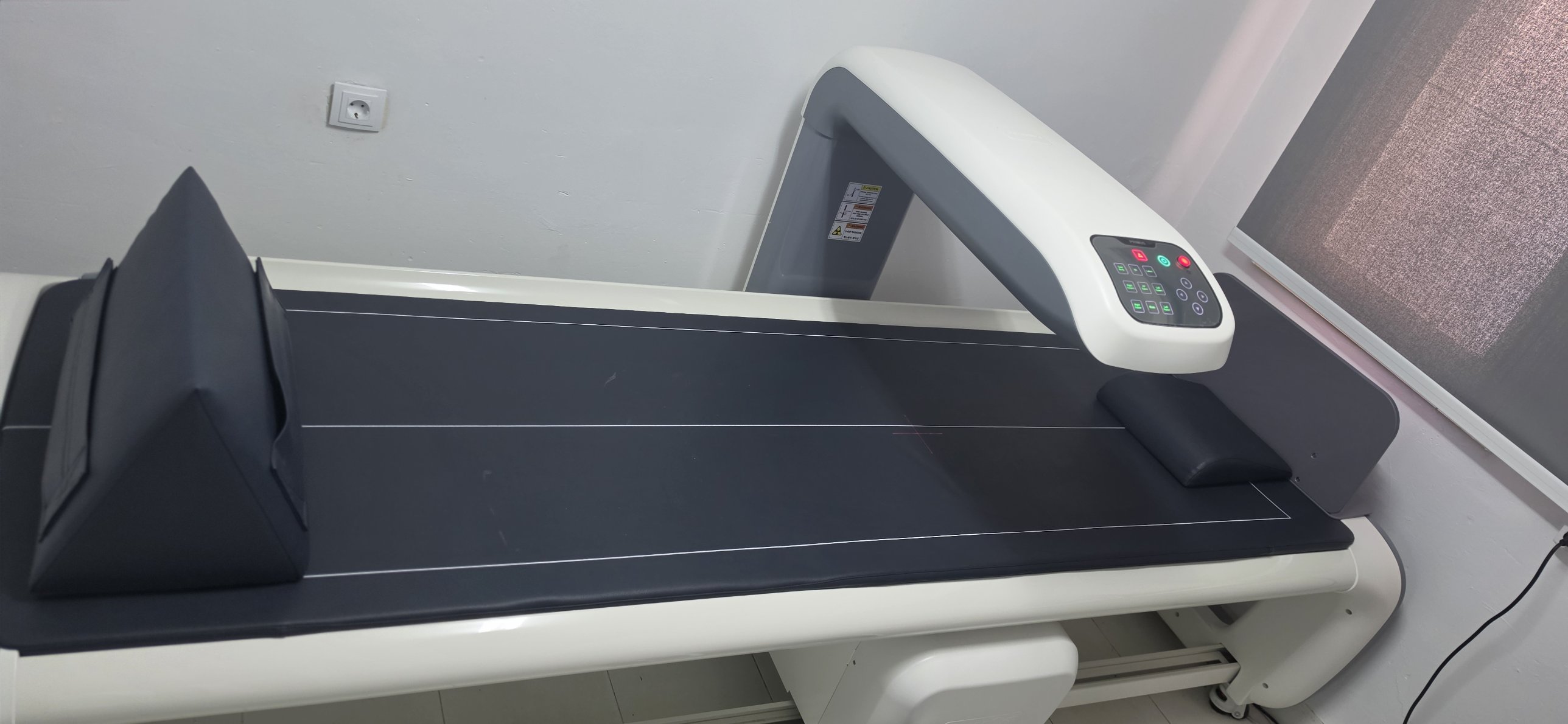
1. Fracture risk estimate. Our software calculates the 10-year fracture risk from bone density and clinical factors such as age, weight, previous fractures or smoking. The calculation relies on the internationally recognised FRAX tool. It helps the doctor decide whether treatment is needed, even when the T-score is not in the osteoporosis range.
2. Growth curves for children. In children, bone density changes with growth. The software therefore compares results with paediatric reference curves, by age, sex and height, and expresses the result as a Z-score. This shows whether the bone is developing normally, for example in a child on long-term treatment or with a chronic disease.
3. Distribution of tissues in the body. The machine does not only measure bone. It also gives the distribution of fat mass, lean mass (muscles and organs) and bone mass, overall and by segment (trunk, arms, legs). This information is useful in several situations:
- Obesity: distinguishing fat mass from muscle mass, and spotting abdominal fat, which is linked to cardiometabolic risk.
- Sarcopenia: detecting loss of muscle mass in older people, which is common and increases the risk of falls.
- Malnutrition and chronic diseases: following lean mass, for example in cancer, kidney disease or heart failure.
- Inflammatory diseases and treatments: assessing the impact of some treatments on body composition.
In practice
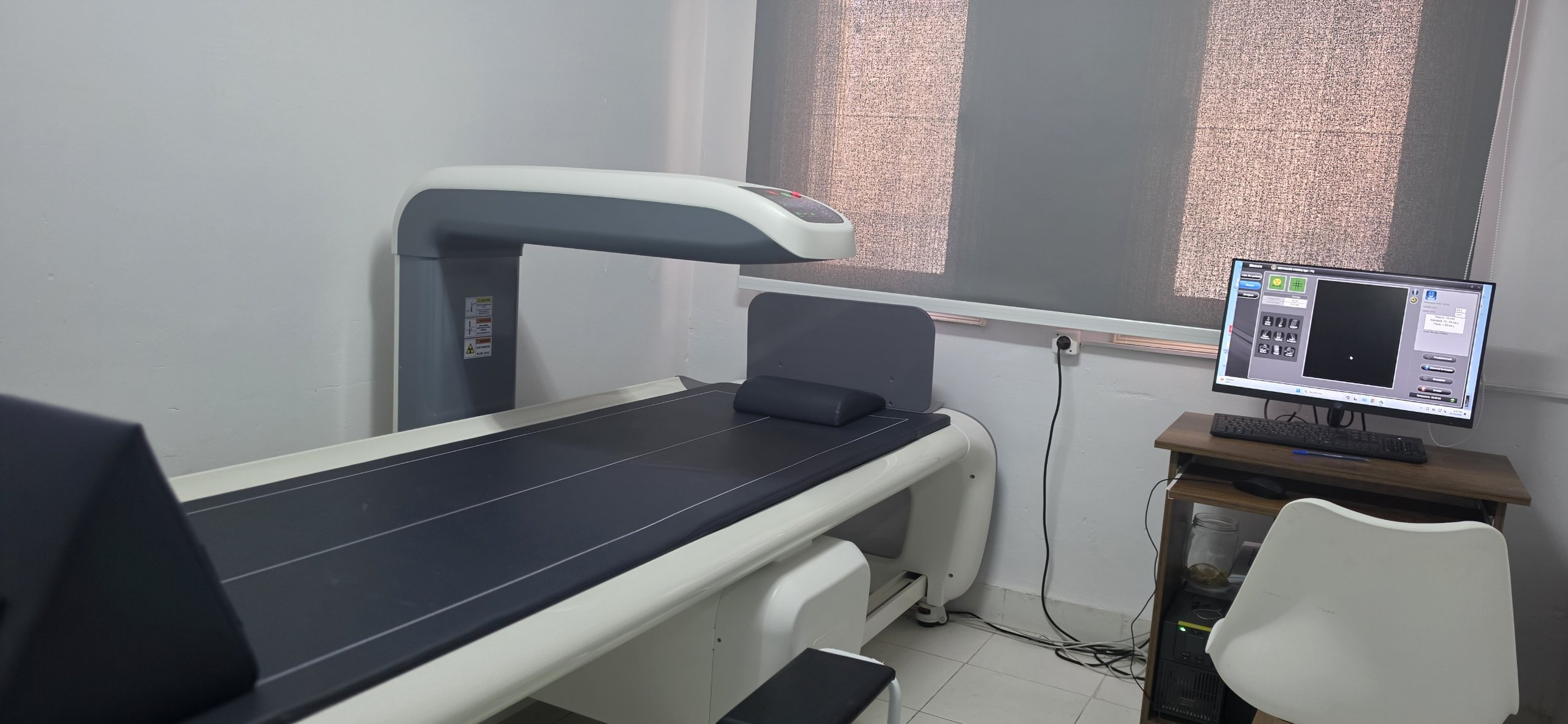
The exam lasts about 10 to 15 minutes. The patient lies on a table while a sensor arm passes over the body. It is advised not to take calcium supplements in the 24 hours before the exam and to remove metal objects (zips, buttons, jewellery) from the area being examined.
The results are interpreted by the doctor, who places them in the context of each patient. A result is never an isolated diagnosis: it must be discussed with a doctor.
Thursday mornings are reserved for thermal ablation sessions, by appointment.